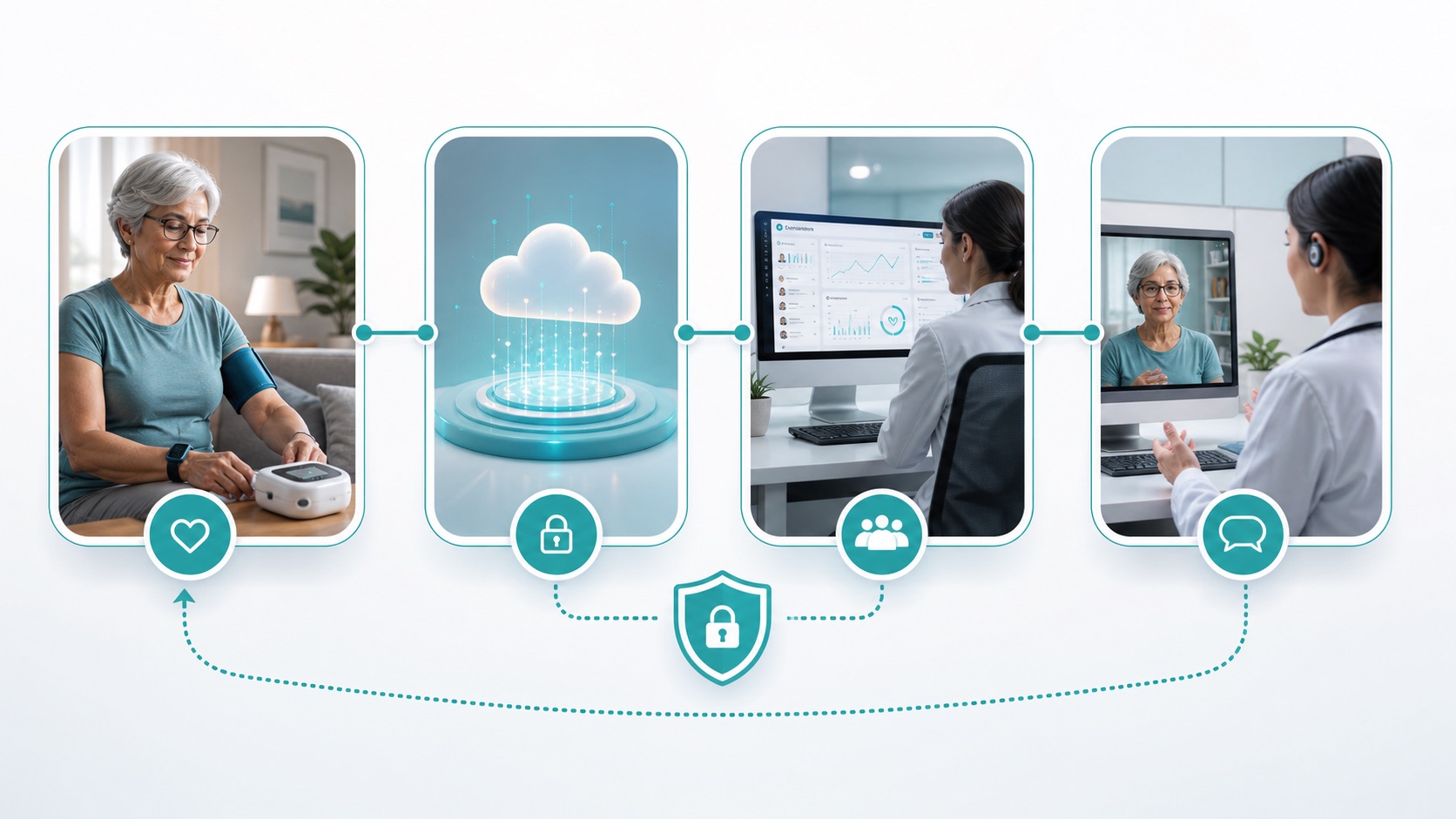
Remote patient monitoring, often called RPM, uses home health readings and care team workflows to support follow-up outside a traditional appointment. Medtrone explains the operational side of RPM in clear, practical language.
What Remote Patient Monitoring Means
RPM programs usually combine home measurements, patient education, data collection, and a defined review process. The technology matters, but the workflow matters just as much.
- Choose the health readings to monitor
- Select simple tools patients can use consistently
- Teach patients how and when to take readings
- Define who reviews the data and when
- Create escalation steps for concerning patterns
Common Home Monitoring Metrics
Depending on the care program, home monitoring may include blood pressure, pulse, weight, oxygen saturation, glucose, temperature, or symptom notes. Medtrone focuses first on blood pressure and hypertension monitoring because it is one of the most common home monitoring use cases.
Important Note
Medtrone content is educational. RPM decisions should be designed and reviewed by qualified healthcare professionals and appropriate operational leaders.