Connected Care vs. Simple Home Monitoring: What Comes First?
Connected care is valuable, but simple home monitoring often comes first. A connected platform can transmit readings, organize data, and support care team review. But if the patient cannot measure correctly or keep a routine, the connection only moves weak data faster.
For blood pressure monitoring, the sequence matters. Build the measurement habit first. Then add digital tools where they solve a real workflow problem.
Simple monitoring is the foundation
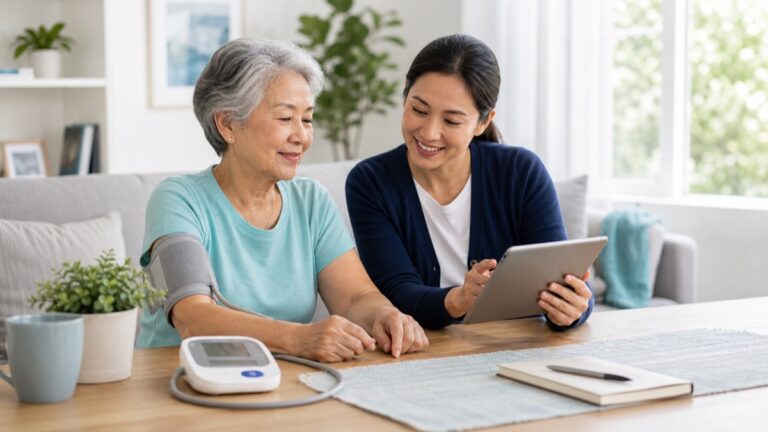
Simple home monitoring means a person uses a blood pressure device away from the clinic, follows a consistent routine, records the readings, and shares them with a care team when instructed. The CDC calls this self-measured blood pressure monitoring when done with a personal device outside a doctor’s office or hospital.
This simple layer can support better conversations even before a connected platform is introduced.
Connected care adds transmission and review
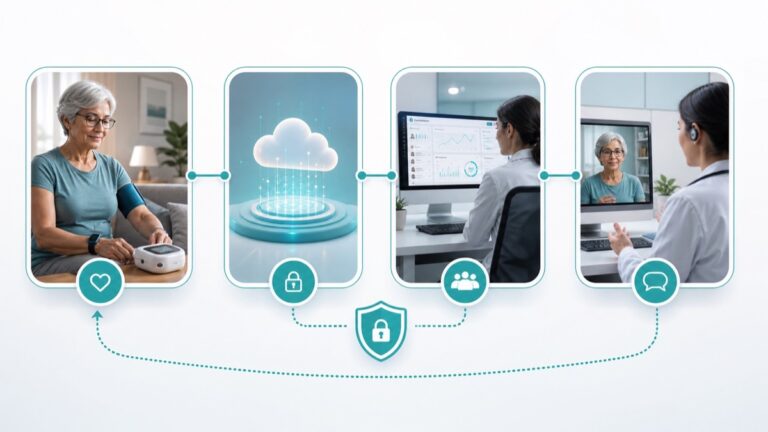
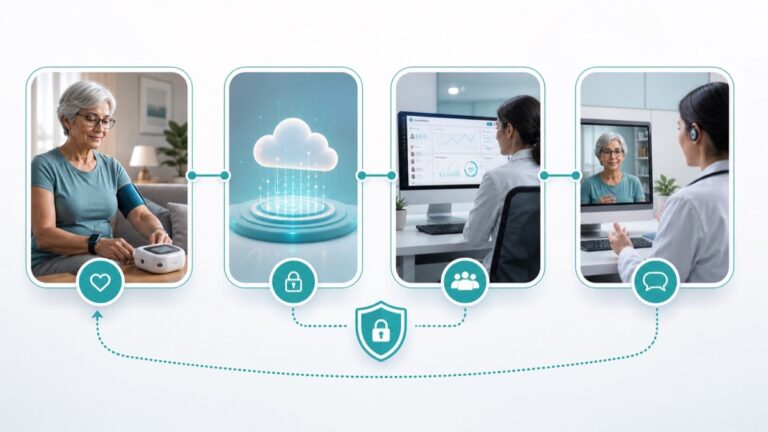
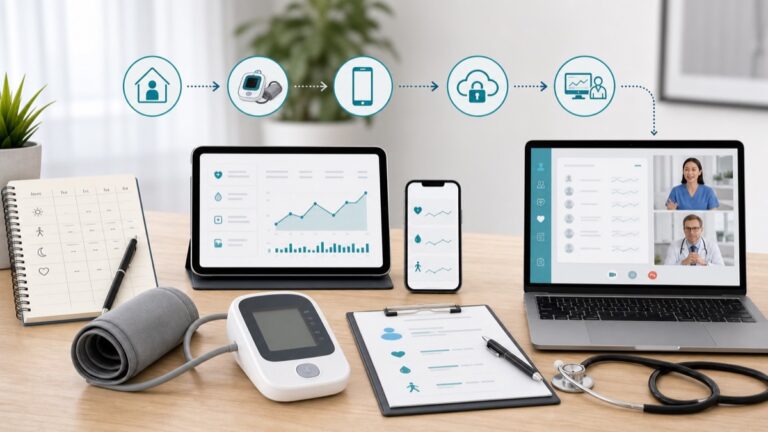
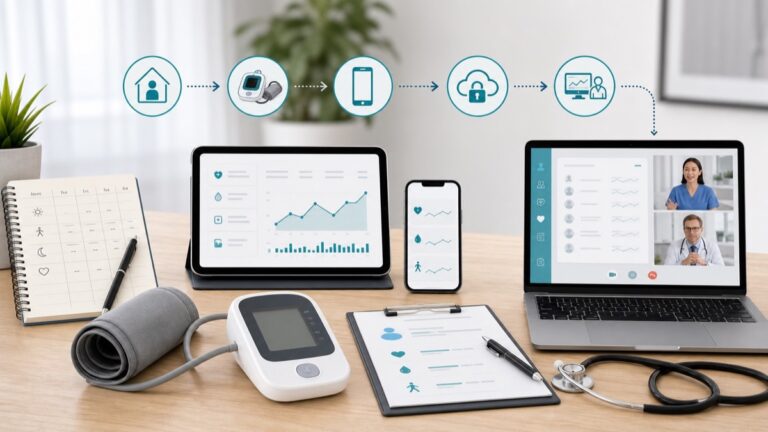
Connected care may include device syncing, app dashboards, patient portals, alerts, or remote review. These tools can be helpful when a clinic has the staff and process to use them. Medtrone’s digital health monitoring guide explains how digital tools fit into a broader care system.
The question is not whether connected care is good. The question is whether the program is ready for it.
Use the readiness test
- Can patients take readings with correct technique?
- Is the device easy enough to use repeatedly?
- Does the clinic know who reviews readings?
- Are patients told when to call for help?
- Can staff manage the volume of data?
- Will connected features reduce work or create more work?
If the answer to several of these questions is no, the program may need a simpler first phase.
Device features that help either model
Whether readings are connected or logged manually, a good device should be readable, comfortable, and appropriate for the user’s arm. The American Heart Association recommends an automatic cuff-style upper arm monitor for home blood pressure monitoring.
For product education, ZYBS Medical Group’s blood pressure monitor product features page helps consumers understand practical device details.
When connected care should come next
Connected care becomes more compelling when readings are frequent, patients are hard to reach, the care team needs a shared dashboard, or manual review is creating delays. It also becomes useful when caregivers need visibility and the patient has agreed to a clear sharing process.
Medtrone’s hypertension remote monitoring guide explains how device data can become part of an ongoing workflow.
FAQ
Is connected care better than manual logging?
Not automatically. Connected care is better when it improves the workflow and the care team can use the incoming data responsibly.
Can simple home monitoring still be useful?
Yes. A consistent written or device-stored log can be valuable during care conversations.
What should come before app selection?
Measurement technique, patient education, device fit, and review ownership should come first.
Do patients need to understand every digital feature?
No. They need to understand the routine, what is being shared, and who to contact with concerns.
Sources and further reading
- CDC: Measuring Your Blood Pressure
- American Heart Association: Home Blood Pressure Monitoring
- MedlinePlus: High Blood Pressure
- FDA: What Is Digital Health?
Next step
Start with the smallest reliable workflow. Add connected tools when they clearly improve the experience for patients and staff.
Medical disclaimer: This article is for education only and is not a diagnosis, treatment plan, or substitute for care from a licensed health professional.