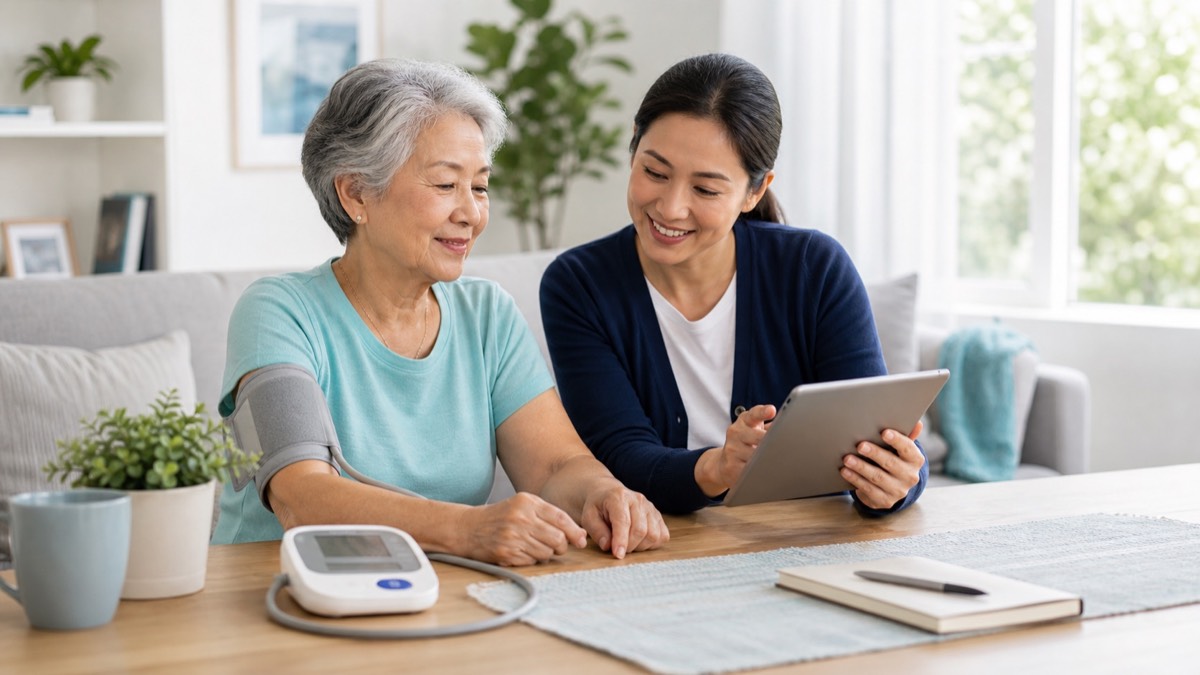
How Caregivers Can Help Seniors Track Home Health Readings
Caregivers can make home health monitoring easier, calmer, and more consistent. For seniors tracking blood pressure, the caregiver’s role is not to diagnose or treat. It is to support the routine, help keep records, and make sure questions reach the right health professional.
This matters because monitoring can feel intimidating. Numbers on a screen are easy to misunderstand when no one has explained what to do with them.
Start with the care team’s instructions
The caregiver should begin with the plan given by the clinician. That plan may include when to measure blood pressure, how many readings to take, what log to use, and when to call the office. If the plan is unclear, the caregiver can help the senior ask for clarification.
Home readings should not be treated as a standalone diagnosis. MedlinePlus notes that high blood pressure is diagnosed through checks from a health care provider, often involving more than one reading at separate appointments.
Help create the right environment
The CDC recommends several steps for a more accurate home reading: avoid eating or drinking shortly before measuring, empty the bladder, sit with back supported, keep feet flat, rest the arm at chest height, place the cuff on bare skin, and avoid talking during measurement.
A caregiver can help set up that environment. Small details matter. A chair, table, quiet room, and visible log can turn monitoring into a routine rather than a scramble.
Support the device routine
For many seniors, an easy-to-read upper arm monitor is a practical choice. The American Heart Association recommends an automatic cuff-style upper arm monitor for home monitoring. ZYBS Medical Group has a page for families evaluating an easy blood pressure monitor for seniors.
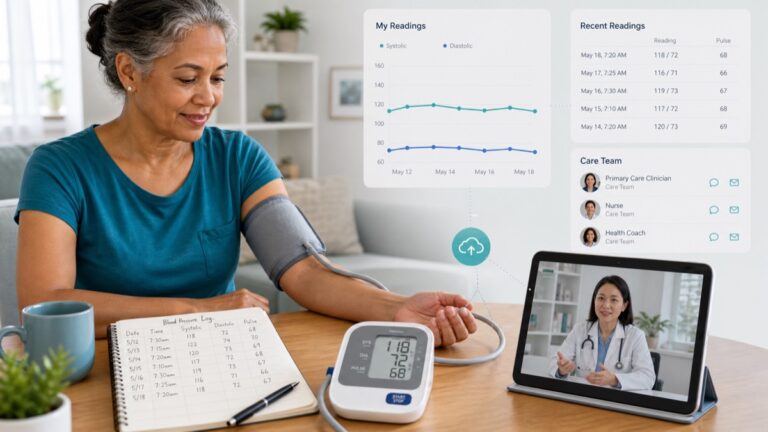
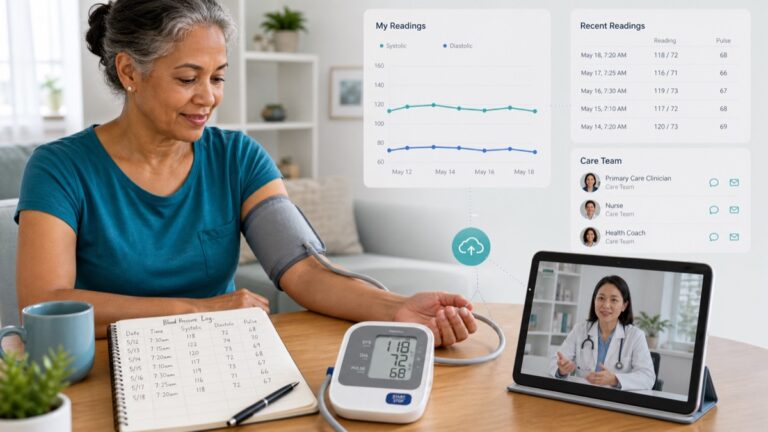
The caregiver can help by checking that the cuff is positioned correctly, the display is readable, and the readings are written down clearly.
Keep the log simple
A simple log is easier to maintain than a complicated tracker. It can include date, time, reading, pulse if available, and notes requested by the care team. The caregiver should avoid adding interpretations unless the clinician specifically requests certain notes.
Medtrone’s guide to patient-generated health data explains why context helps make home readings more meaningful.
Know when to ask for help
Caregivers should know the action plan. If the senior feels unwell, has concerning symptoms, or is frightened by a reading, the caregiver should follow the clinician’s guidance or seek urgent help when appropriate. A home monitor is a tool for communication, not a replacement for medical care.
Make it respectful
Monitoring should not make a senior feel watched or controlled. Explain the routine, invite participation, and keep the tone calm. The goal is confidence and communication.
For a wider view of senior-friendly monitoring, see Medtrone’s digital health monitoring for seniors page.
FAQ
Should caregivers take the reading for the senior?
It depends on the senior’s ability and clinician instructions. Some caregivers help set up while the senior remains actively involved.
What should caregivers write in a blood pressure log?
They should record the information requested by the care team, commonly date, time, readings, pulse if available, and relevant notes.
Can caregivers decide whether readings are dangerous?
Caregivers should follow the clinician’s instructions and seek urgent help if symptoms or circumstances warrant it.
How can caregivers reduce anxiety around monitoring?
Use a calm routine, avoid reacting dramatically to single readings, and focus on sharing patterns with the care team.
Sources and further reading
- CDC: Measuring Your Blood Pressure
- American Heart Association: Home Blood Pressure Monitoring
- MedlinePlus: High Blood Pressure
- FDA: What Is Digital Health?
Next step
Create a one-page caregiver checklist for the senior’s measurement routine and keep it near the monitor.
Medical disclaimer: This article is for education only and is not a diagnosis, treatment plan, or substitute for care from a licensed health professional.