Remote Patient Monitoring for Hypertension: Device and Workflow Basics
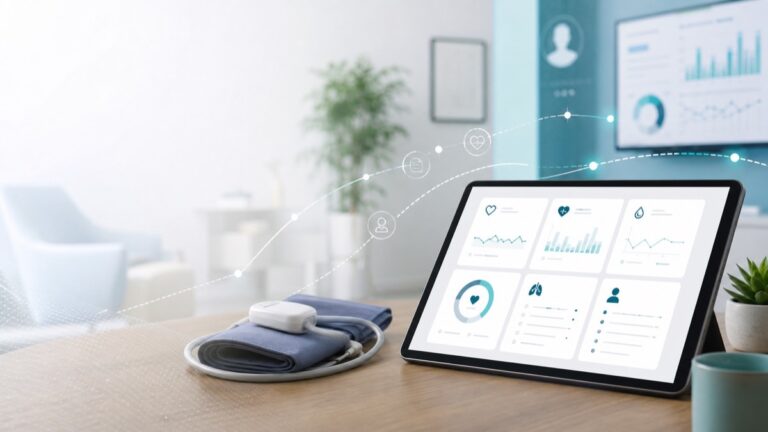
Remote patient monitoring for hypertension works best when the technology is simple enough for everyday use and the workflow is clear enough for care teams to trust. The monitor matters, but the process around the monitor matters just as much: how readings are taken, how they are recorded, who reviews them, and what a patient should do when a number looks unusual.
This guide is written for clinic leaders, caregivers, and health technology teams who are planning blood pressure monitoring outside the office. It is educational, not medical advice. Patients should follow their own clinician’s instructions for when to measure blood pressure and what to do with the results.
What remote patient monitoring means for hypertension
In hypertension care, remote patient monitoring usually starts with blood pressure readings taken away from the clinic. Those readings may come from a connected device, a home monitor with memory, or a written log that is shared during a visit. The common goal is the same: give the care team a better view of everyday blood pressure patterns than one office reading can provide.
The CDC describes self-measured blood pressure monitoring as using a personal blood pressure device away from a doctor’s office or hospital. It also notes that people with high blood pressure may be more likely to lower blood pressure when self-measurement is combined with support from a health care team.
That last part is important. Remote monitoring is not simply a device purchase. It is a device plus a human workflow.
The basic device layer
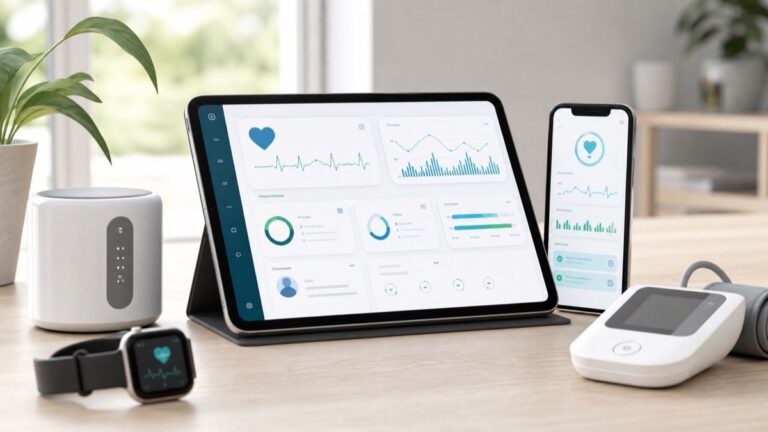
For blood pressure, the device layer should be practical before it is impressive. The American Heart Association recommends an automatic, cuff-style upper arm monitor for home blood pressure monitoring. A device used in a remote monitoring workflow should be easy to position, easy to read, and simple enough for repeated use by the intended patient population.
- Upper arm cuff: usually preferred for home blood pressure tracking.
- Readable display: especially important for seniors and caregivers.
- Memory or log support: helpful when readings are reviewed later.
- Appropriate cuff fit: essential because poor cuff fit can affect reading quality.
- Simple instructions: the best program is the one patients can actually follow.
For readers comparing device types, ZYBS Medical Group has a consumer-focused guide to an upper arm blood pressure monitor and a broader page on choosing a home blood pressure monitor.
The patient workflow
A clean patient workflow answers three questions: when should I measure, how should I measure, and where should the reading go?
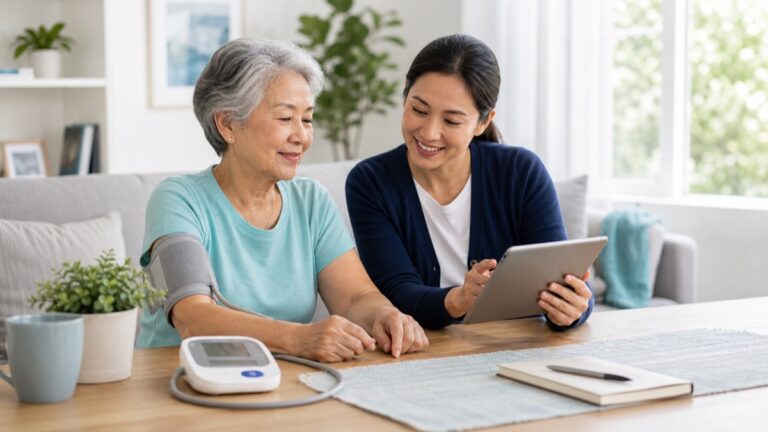
Most programs should begin with a written measurement routine. The CDC advises taking readings at the same time each day when instructed by a care team, taking at least two readings one or two minutes apart, and using a blood pressure log. It also advises sitting with the back supported, feet flat on the floor, arm supported at chest height, cuff on bare skin, and no talking during measurement.
Those steps sound basic, but they are where many home monitoring programs succeed or fail. A connected dashboard cannot repair poor technique after the fact. Better technique produces better data.
The care team workflow
The clinical side of remote monitoring needs a review rhythm. Who checks incoming readings? How often? What counts as incomplete data? When should a patient be contacted? What message should be sent when readings are missing?
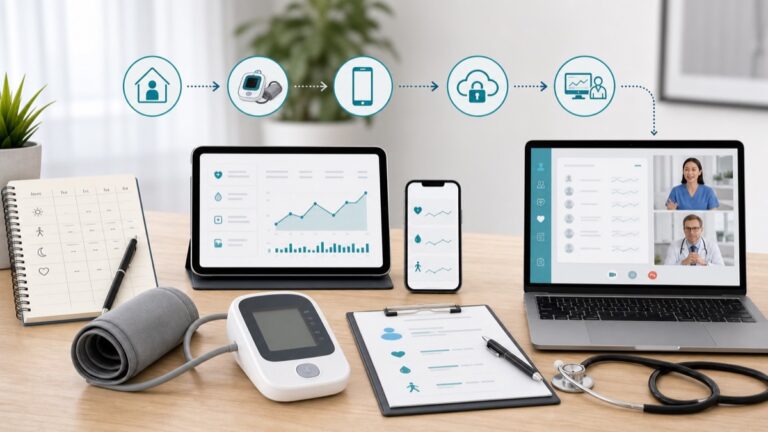
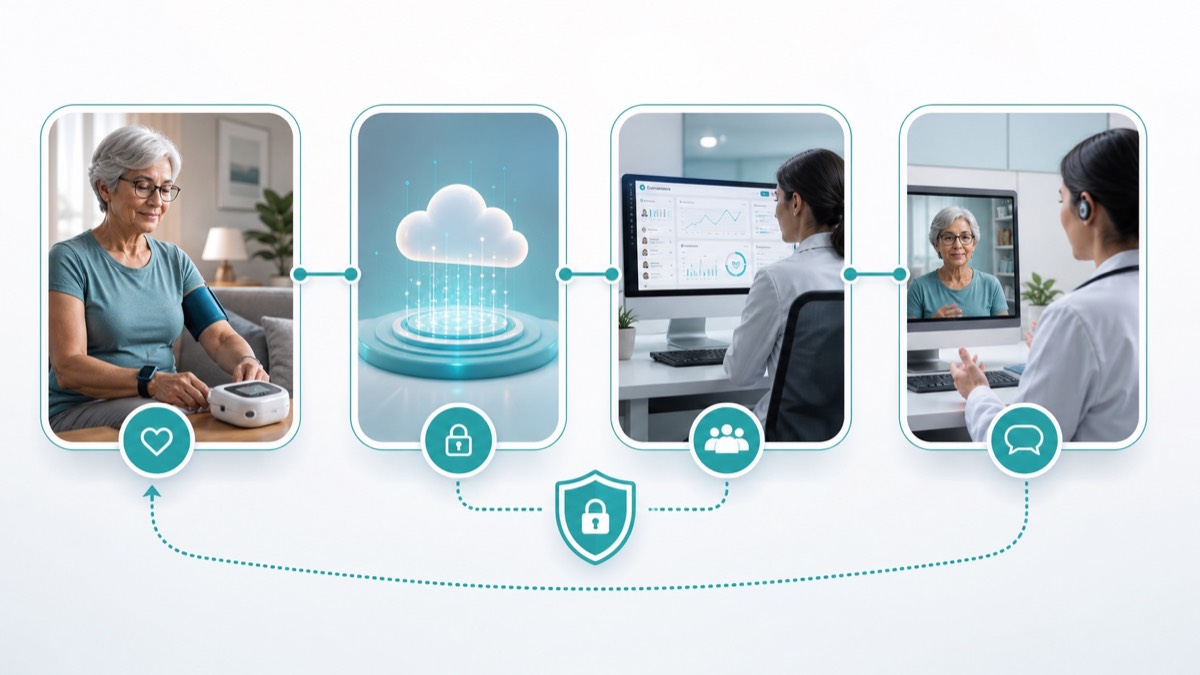
A simple starting workflow can look like this:
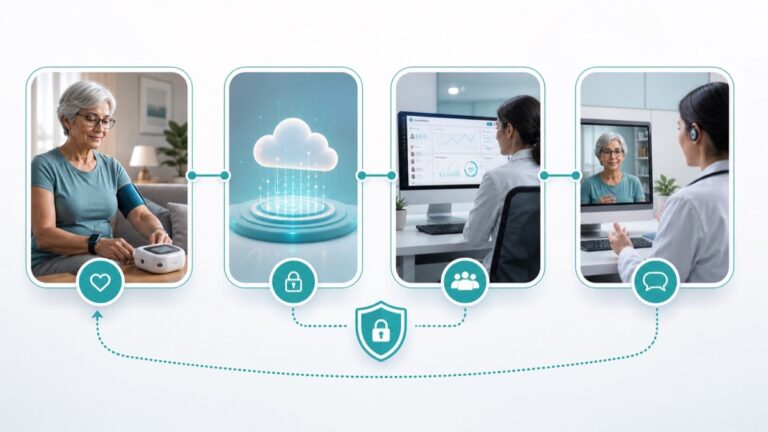
- Patient takes readings according to the care plan.
- Readings are stored in a device, app, portal, or written log.
- Staff review trends at defined intervals instead of reacting to every single number.
- Unusual patterns are escalated according to the clinic’s policy.
- The clinician discusses the pattern with the patient and documents next steps.
Medtrone’s pillar guide to remote patient monitoring for hypertension explains why this workflow layer is central to making home readings useful.
Data quality before data volume
More readings are not automatically better. A smaller set of consistent readings can be more useful than a large set collected under changing conditions. For example, readings taken after rushing, caffeine, exercise, talking, or using a cuff over clothing may not tell the same story as readings taken under a consistent routine.
This is where patient-generated health data needs context. Medtrone’s guide to patient-generated health data covers the difference between raw numbers and usable information.
Where digital health fits
The FDA describes digital health as a broad area that includes mobile health, health IT, wearable devices, telehealth, telemedicine, and personalized medicine. In a hypertension monitoring program, digital health may be as simple as a secure patient portal or as advanced as device integration with a care management platform.
For many clinics, the smartest first step is not the most complex platform. It is a reliable measurement routine, a patient-friendly device, and a review process that the care team can sustain. Technology should reduce friction, not create a second job for patients or staff.
For a broader view, see Medtrone’s guide to digital health monitoring.
Practical checklist before launch
- Choose a device type that patients can use without repeated coaching.
- Confirm cuff size options for the population being served.
- Create a one-page measurement routine.
- Decide how readings will be captured and reviewed.
- Define staff roles and escalation rules.
- Teach patients what to do if they feel unwell or are worried about a reading.
- Review results in context instead of treating one number as the whole story.
FAQ
Is remote patient monitoring the same as home blood pressure monitoring?
Not exactly. Home blood pressure monitoring is the patient activity. Remote patient monitoring adds a care workflow, such as sharing readings with a clinic and reviewing trends over time.
Does every hypertension monitoring program need a connected device?
No. Connected devices can help, but some programs begin with device memory or written logs. The key is whether the readings are taken correctly, recorded consistently, and reviewed appropriately.
What type of blood pressure monitor is usually preferred for home use?
The American Heart Association recommends an automatic cuff-style upper arm monitor for home blood pressure monitoring.
Can home readings diagnose high blood pressure?
Patients should not diagnose themselves from home readings. MedlinePlus notes that a health care provider uses blood pressure checks, often with more than one reading at separate appointments, to diagnose high blood pressure.
Sources and further reading
- CDC: Measuring Your Blood Pressure
- American Heart Association: Home Blood Pressure Monitoring
- MedlinePlus: High Blood Pressure
- FDA: What Is Digital Health?
Next step
If you are building a home monitoring routine for a patient or family member, start with a simple device and a clear measurement plan. ZYBS Medical Group’s upper arm blood pressure monitor for home use is a practical product page for readers who are ready to compare a home-use option.
Medical disclaimer: This article is for education only and is not a diagnosis or treatment plan. Always follow guidance from a licensed health care professional.