How Home Blood Pressure Readings Fit Into Virtual Care
Virtual care becomes more useful when the conversation has good home data behind it. For hypertension and cardiovascular risk discussions, home blood pressure readings can give a clinician and patient something concrete to review together.
That does not mean every virtual visit needs a complicated digital dashboard. Sometimes the most valuable asset is a clear log of readings taken with a consistent routine.
Why office readings are only one part of the story
Blood pressure can vary between home and clinic. The CDC notes that nervousness during a measurement can affect readings, and it describes white coat syndrome as one reason an office reading may not match readings outside the office. Home monitoring can help add context when guided by a health care team.
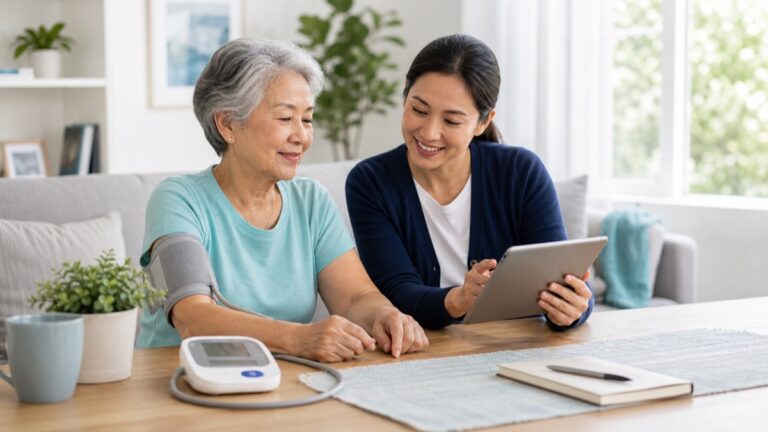
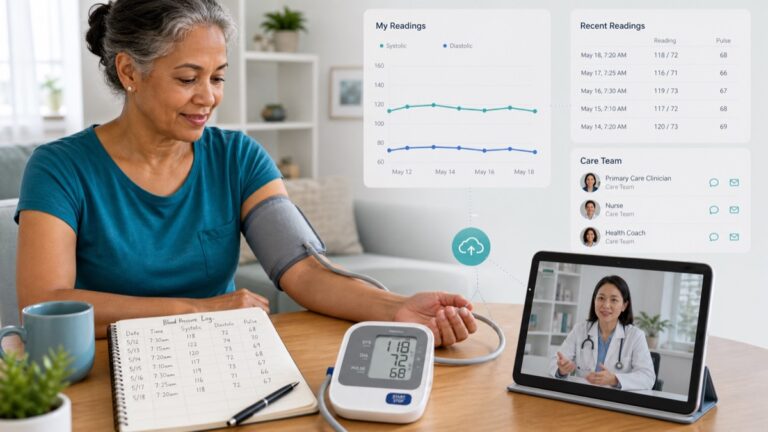
Virtual care can make that context easier to discuss. A patient can review the log from home, explain when readings were taken, and ask focused questions.
What virtual care teams need from home readings
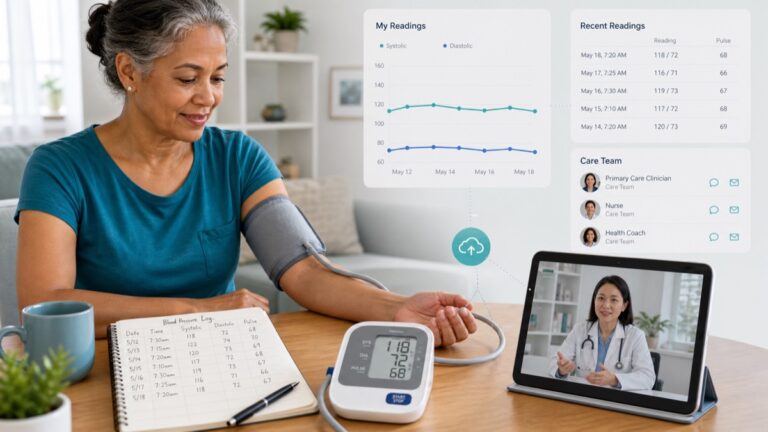
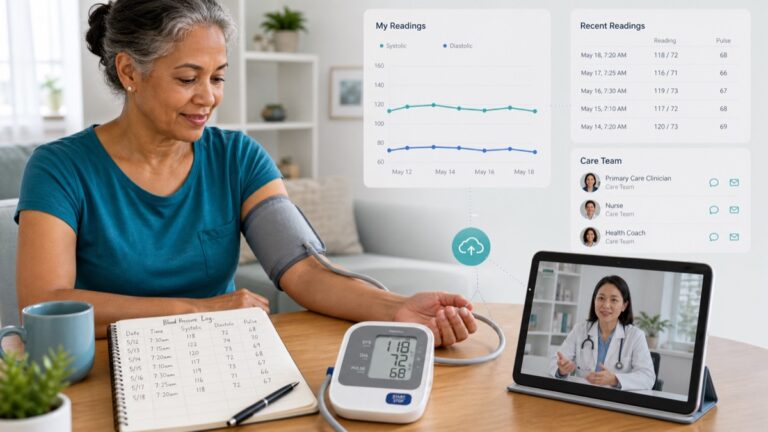
Care teams need readings that are consistent, legible, and connected to a routine. Random numbers collected under different conditions are harder to use. A good home reading summary should include the date, time, readings, and any notes the clinician requested.
For technique support, ZYBS Medical Group has a practical guide on how to measure your blood pressure correctly at home.
Where remote patient monitoring begins
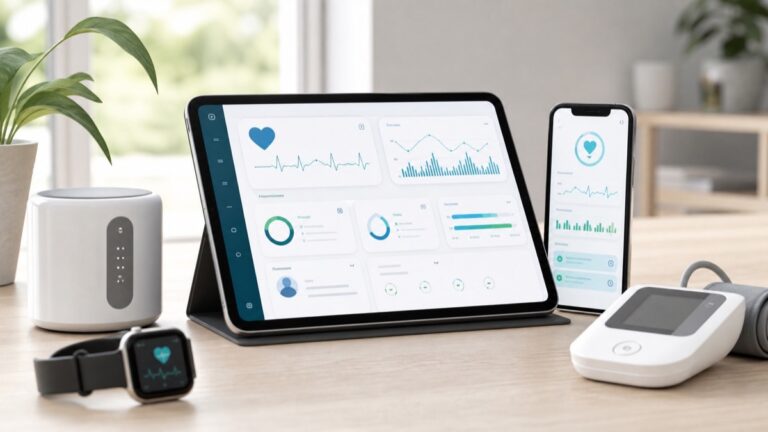
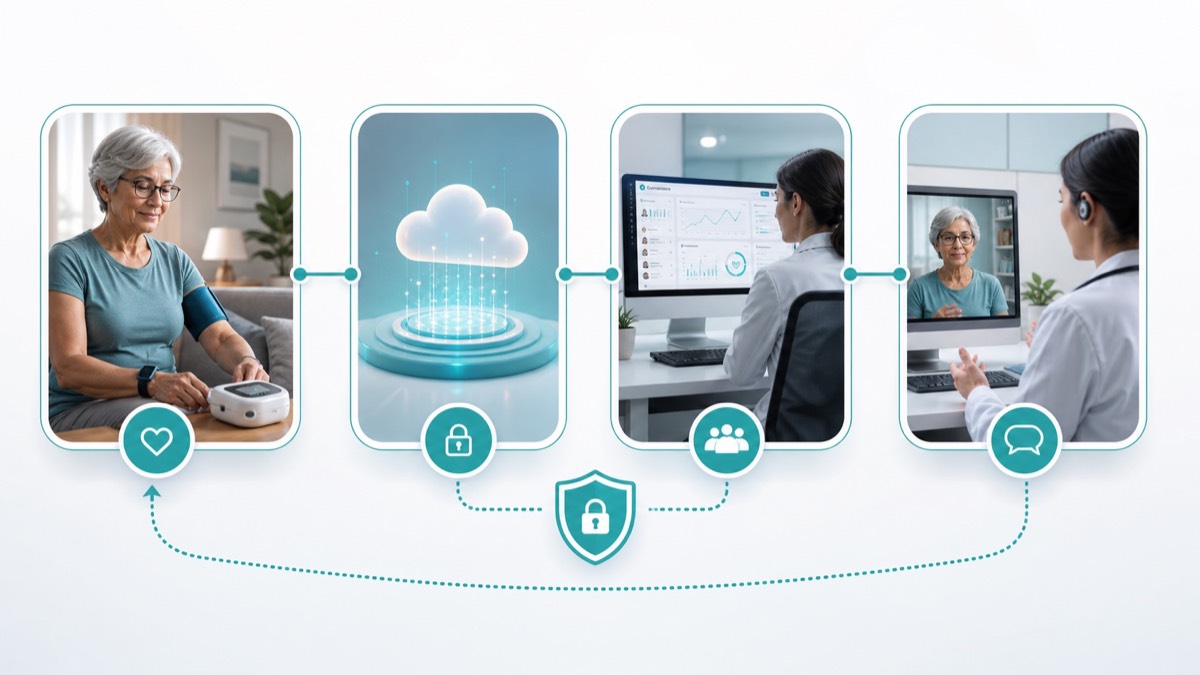
A virtual care visit may be the first step toward a more structured remote monitoring program. If the care team needs repeated readings over time, a remote patient monitoring workflow can define who reviews the readings and when follow-up happens.
Medtrone’s guide to remote patient monitoring for hypertension explains how home readings can become part of a broader care process.
Device choice affects virtual visit quality
A virtual visit goes better when the patient can trust the routine and explain it clearly. If the display is hard to read, the cuff is difficult to place, or the monitor does not store readings, the conversation becomes harder.
For many home users, an upper arm monitor is the familiar starting point. The American Heart Association recommends an automatic, cuff-style upper arm monitor for home blood pressure monitoring. ZYBS Medical Group’s home blood pressure monitor page explains this consumer use case.
How patients can prepare before a virtual visit
- Follow the measurement plan from the care team.
- Write readings clearly or have the monitor available.
- Note whether readings were taken at the same time each day.
- Prepare questions about patterns, not just one number.
- Do not adjust medication unless instructed by a clinician.
This preparation turns a remote appointment into a more focused conversation.
FAQ
Can a virtual care visit use home blood pressure readings?
Yes, when the clinician asks for them and the readings are measured and recorded properly. The care team decides how to use the information.
Are home readings always more accurate than office readings?
Not always. Home readings depend on device fit, technique, timing, and the measurement routine.
Should patients send every reading before a visit?
Patients should follow their clinic’s instructions. A clear summary is often easier to review than a long unorganized list.
Can a home monitor replace clinical care?
No. A home monitor supports conversations with a health professional; it does not replace medical evaluation.
Sources and further reading
- CDC: Measuring Your Blood Pressure
- American Heart Association: Home Blood Pressure Monitoring
- MedlinePlus: High Blood Pressure
- FDA: What Is Digital Health?
Next step
For virtual care workflows, create a simple home reading template and pair it with a patient-friendly measurement guide.
Medical disclaimer: This article is for education only and is not a diagnosis, treatment plan, or substitute for care from a licensed health professional.